
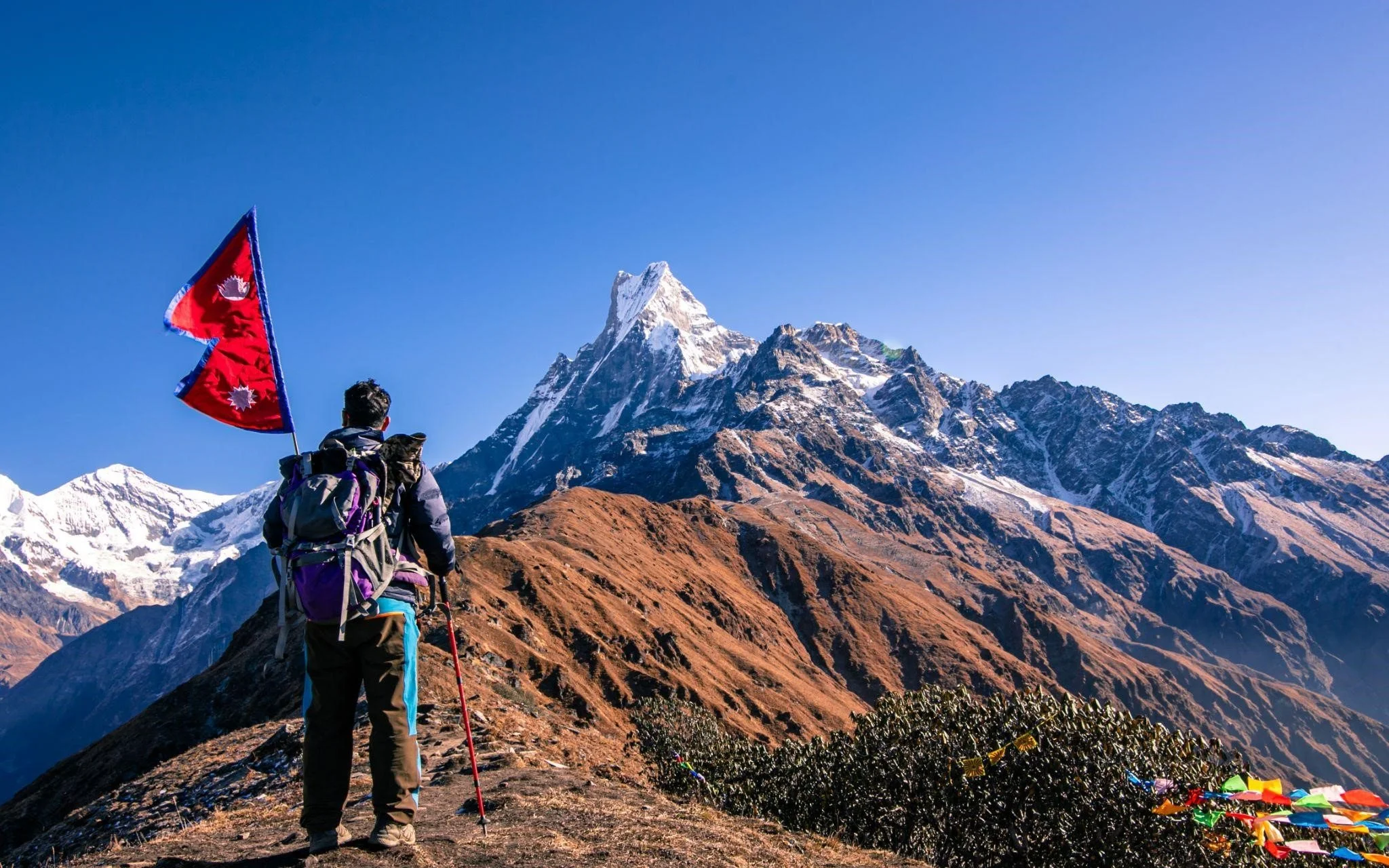
Why Your Packing List Matters
Packing well is one of the biggest factors between a comfortable, confident trek and a miserable one. The Himalayas throw everything at you — freezing mornings above 4,000 m, blazing sun on stone staircases, sudden rain showers and dusty tea-house trails — so the right gear matters far more than in most other mountain regions.
The good news is that trekking in Nepal is teahouse based. You sleep in lodges, eat cooked meals each evening, and your trekking company will carry the heavy loads. You do not need an expedition-sized kit. What you need is a carefully chosen, lightweight system of layers and essentials that can handle everything from humid jungle trails in the lower hills to -15°C nights at high camp.
Below is the complete packing list we give every Big Sky Treks traveller, refined over thousands of Everest, Annapurna, Langtang and Manaslu treks. Use it as a checklist, adapt it to your season and route, and pack light — every kilogram counts when you are carrying it uphill.
The Golden Rules of Trekking Packing
Before you pack a single item, commit these four rules to memory:
- Pack light. Your main pack should ideally weigh 10–14 kg. If you are unsure whether you will use something, leave it at home (or in your Kathmandu hotel bag).
- Layer, never overload. Instead of one huge jacket and a heavy fleece, carry several thin layers you can add or remove as the temperature changes through the day.
- Keep valuables on you. Passport, cash, cards, phone, camera and medicines always travel in your daypack or a small belt pouch — never buried in the bag your porter carries.
- Waterproof everything. Even in the dry season, rain and river crossings happen. Dry bags and waterproof stuff-sacks are the cheapest insurance you will buy.
Dress in Layers: The Three-Layer System
Temperatures on a single Nepal trekking day can swing by more than 25°C — from a chilly 5°C morning start to a shirt-sleeved 20°C+ midday on the trail, then back below freezing after sunset. The only comfortable way to handle this is a proper three-layer system:
- Base layer — a lightweight, quick-drying merino wool or synthetic top that wicks sweat away from your skin. Avoid cotton; once wet, it stays wet and cold. Carry two so one can be washed and dried while you wear the other.
- Mid layer — a fleece or lightweight down/synthetic jacket for insulation during rest stops, mornings and evenings.
- Shell layer — a waterproof and windproof (preferably breathable) jacket that protects you from rain, snow and the strong wind found on passes and ridgelines.
On warm low-altitude days you will walk in just your base layer; at high camp you will be wearing all three plus your big down jacket and hat. Buy quality where it matters most — your waterproof shell and your warm layer — and you can save money on the rest.
Clothing Checklist
Here is the exact clothing set we recommend packing for a typical 10–15 day teahouse trek:
| Item | Quantity | Notes |
|---|---|---|
| Base layer tops (merino/synthetic) | 2 | Wear one, wash one. Long-sleeve preferred for sun protection. |
| Hiking trousers (convertible zip-off) | 1–2 | Quick-drying; one pair converts to shorts for warm valleys. |
| Comfortable trekking shorts | 1 | Optional but great below 3,000 m on sunny days. |
| Fleece jacket or mid-layer | 1 | For walking in the cold and evenings at the lodge. |
| Down/synthetic insulated jacket | 1 | Essential for high passes and cold lodge evenings. |
| Waterproof shell jacket (Gore-Tex or similar) | 1 | Rain, snow and wind protection — do not skip this. |
| Waterproof over-trousers | 1 | For rain and early-morning snow on passes. |
| Trekking socks (merino wool) | 3–4 | Never cotton. Change into a dry pair each afternoon. |
| Liner socks (optional) | 2 | Reduces friction and helps prevent blisters. |
| Warm hat & sun hat | 1 each | Beanie for cold; wide-brim or cap for strong UV. |
| Gloves | 1–2 | Warm liner gloves plus waterproof shell mitts for snow. |
| Buff / neck gaiter & sunglasses | 1 each | Sunglasses with UV400 protection are essential above snow. |
| Sleepwear & lodge sandals | 1 set | Light fleece sleepwear; sandals or crocs for evenings. |
| Underwear & bra | 3–4 | Quick-dry synthetic fabrics dry overnight. |
Teahouses are not heated above the dining room fireplace, so plan warm lodge clothes: thermal leggings, a down layer and warm socks to change into after your walking day ends.
Footwear & Socks
Your boots are the single most important piece of equipment on a Nepal trek. You will walk on rough stone staircases, loose scree, mud, snow and suspension bridges, sometimes for seven hours a day — so comfort and fit come before everything else.
- Waterproof trekking boots — broken in well before you arrive. Choose ankle-high, waterproof boots with good grip (Vibram-style soles). Stiff enough for rocky terrain, light enough to feel agile.
- Break them in. Wear your boots for at least 30–50 km of walking at home over several weeks. Never fly to Nepal with brand-new boots.
- Camp sandals / crocs — essential for evenings at the lodge and for crossing shallow streams. They double as shower shoes.
- Socks — merino wool trekking socks, 3–4 pairs, plus optional thin liner socks. Change your socks at lunch and again at the lodge to prevent blisters.
- Blisters — pack moleskin or blister plasters (Compeed) and learn to stop and treat hot spots early.
Backpack & Sleeping Gear
Your main backpack & daypack
On most Big Sky Treks routes you will hire a porter to carry the bulk of your gear. That means you need two bags:
- Main backpack or duffel (50–70 L): This bag — carried by your porter — holds your sleeping bag, clothing and spare gear. A duffel-style bag with straps is easiest for porters; a backpack works too. Keep it under 12–15 kg, ideally in dry bags.
- Daypack (20–30 L): You carry this yourself every day with your essentials: water, snacks, camera, sunscreen, a warm layer, rain jacket, first-aid bits and your valuables. A daypack with a hip belt and hydration-sleeve compatibility is ideal.
Sleeping gear
- Sleeping bag — rated to about -10°C comfort for autumn/spring high-altitude treks, warmer (to -20°C) for winter. Down packs smaller and lighter but must stay dry; synthetic is cheaper and handles damp better.
- Sleeping bag liner — a silk or cotton liner keeps your bag clean inside dusty teahouse beds and adds warmth. Some trekkers use only a liner at low altitude in summer.
- Foam pad (optional) — teahouse mattresses are thin foam; a lightweight closed-cell pad adds surprising comfort and warmth for a small weight cost.
Health, Hygiene & First Aid
Altitude, unfamiliar food and long days all take a toll, so a small, well-chosen medical and hygiene kit is non-negotiable:
| Category | What to pack |
|---|---|
| First aid basics | Plasters, moleskin, antiseptic wipes, blister plasters, painkillers (paracetamol, ibuprofen) |
| Altitude medication | Acetazolamide (Diamox) — discuss with your doctor; never self-medicate AMS |
| Stomach & hydration | Oral rehydration salts, anti-diarrhoeal tablets, water purification tablets/filter |
| Personal medication | Any prescription medicines plus a little extra in case of delays |
| Toiletries | Biodegradable soap, toothpaste/brush, toilet paper (plus a small trowel), hand sanitiser, wet wipes, lip balm with SPF, moisturiser |
| Sun protection | High-SPF sunscreen, UV-protection sunglasses, lip balm with SPF |
| Extras | Earplugs, small quick-dry towel, sewing kit, personal insect repellent for lowland sections |
Every village on popular routes has a health post and there is a Himalayan Rescue Association (HRA) clinic at many high stops, but you should still carry your own basics and let your guide know about any medical conditions before the trek starts.
Documents, Money & Electronics
Documents & money
- Passport with at least 6 months validity plus 2 photocopies (leave one with your agency).
- Extra passport photos for trekking permits and your TIMS card.
- Travel insurance documents — make sure your policy covers trekking to your maximum altitude (often up to 5,000–6,000 m) including helicopter evacuation. Print the emergency phone numbers.
- Cash (NPR) — ATMs are unreliable above Kathmandu and Pokhara. Carry Nepali rupees for teahouse snacks, drinks and tips, plus a back-up stash of USD.
- Card(s) — a Visa/Mastercard for Kathmandu and emergencies. Notify your bank of your travel dates.
- Permits — your trekking company arranges most permits (ACAP, TIMS, Sagarmatha National Park etc.), but carry your own copies.
Electronics & power
- Power bank (10,000–20,000 mAh) — teahouse sockets are scarce and charging usually costs money above 3,000 m.
- Universal adapter — Nepal uses the same 230 V sockets as many Asian and European countries (Type C/D), but an adapter never hurts.
- Phone — an unlocked phone with an NCELL or NTC SIM from Kathmandu gives you data in most villages.
- Headlamp + spare batteries — essential for early starts and lodges with no electricity at night.
- Camera (optional) plus spare SD cards and batteries. Keep electronics in a dry bag.
Seasonal Packing Guide
Nepal is trekked year-round, and each season changes the finer details of your packing list:
- Autumn (Sep–Nov) — the most popular season. Stable, clear skies; pack the full warm kit with a -10°C sleeping bag and expect cold nights at altitude.
- Winter (Dec–Feb). Cold and clear with snow on passes. Add a warmer sleeping bag (-15 to -20°C), thicker gloves, a balaclava and quality down. Many high passes close — choose lower or winter-friendly routes.
- Spring (Mar–May). Warming days, rhododendron blooms, and possible late snow at altitude. Carry the same core kit as autumn plus a sun hat and plenty of sunscreen.
- Summer/Monsoon (Jun–Aug). Rain, leeches and cloud. Pack a quality waterproof shell, quick-drying clothing, insect repellent, and waterproof everything. Rain covers and dry bags are essential. Trek in rain-shadow regions such as Upper Mustang or Dolpo.
Whatever the season, a waterproof cover for your daypack and dry bags for your main pack are always on the list.
What NOT to Bring
Every extra gram is a gram you (or your porter) carry uphill. Leave these at home:
- Jeans or cotton clothing — heavy, slow to dry and cold when wet.
- Huge expedition backpacks (70 L+) packed to bursting — a sign of overpacking.
- Laptop or tablets — you will not use them and they add serious weight. Your phone is enough.
- Hairdryers, straighteners or bulky toiletries — bring travel sizes only.
- Heavy books or paper guides — download offline maps and e-books instead.
- More than 2–3 pairs of shoes — boots, camp sandals, and that is it.
- Valuables or expensive jewellery — leave them locked in your Kathmandu hotel.
- Weapons or anything on the airline/trail prohibited list — including drones, which require permits and are banned in many national parks.
Final Pre-Departure Checklist
Two days before you fly, lay everything out and tick it off against this final list:
- Broken-in waterproof trekking boots and 3–4 pairs of merino socks.
- Main pack / duffel + daypack, both with rain covers and dry bags.
- Full clothing system: base layers, fleece, down jacket, waterproof shell and over-trousers.
- Warm hat, sun hat, gloves, buff, sunglasses and a good headlamp with batteries.
- Sleeping bag (season-appropriate rating) and liner.
- Trekking poles (or plan to rent in Kathmandu).
- Reusable water bottle/bladder and purification tablets or filter.
- First-aid kit, personal medicines, blister care, and altitude medication if prescribed.
- Toiletries, sunscreen, lip balm, toilet paper and hand sanitiser.
- Passport + copies, extra photos, cash (NPR + USD), cards and printed insurance with emergency numbers.
- Power bank, phone, universal adapter, and spare SD cards.
- Light snacks (energy bars, nuts) for days when you want a boost between tea houses.
Still unsure about a specific item? Ask us — our team has trekked every route we sell, and we are happy to tailor this list to your exact itinerary, season and comfort level. That is what we are here for.